
Nuclear Security Training Programs
Building global expertiseNSSPI’s Nuclear Security Training programs provide specialized, customizable instruction in radiation detection, nuclear security, search and localization, nuclear forensics, and operations in contaminated environments.
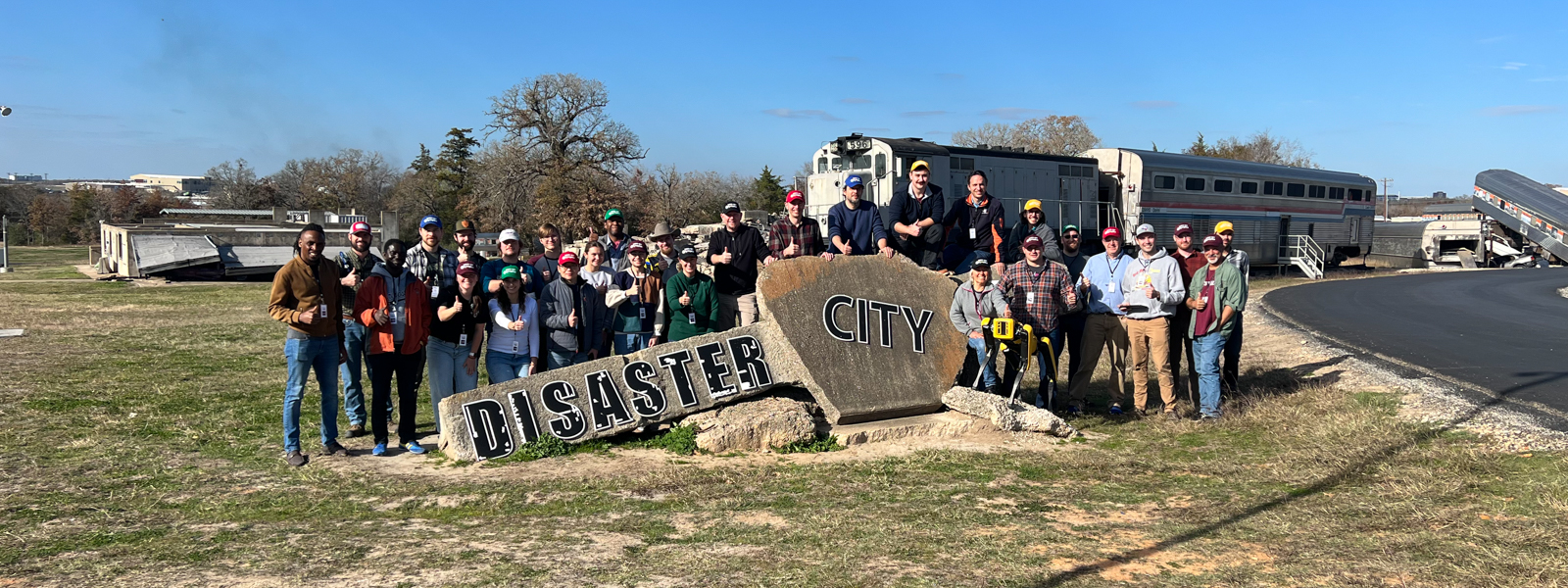
NSSPI develops and delivers nuclear security and safeguards training for international students, professionals, and government personnel in partnership with U.S. government agencies, the IAEA, and other organizations.
Programs range from short technical courses and workshops to multi-day training events, study tours, and customized capacity-building programs. Training may include lectures, laboratory exercises, radiation detection activities, field exercises, facility visits, tabletop exercises, group projects, and technical exchanges.
NSSPI has hosted participants from countries around the world and also delivers programs internationally, drawing on Texas A&M faculty, facilities, and technical expertise to provide practical, application-focused training in nuclear security, safeguards, radiation detection, emergency response, and related areas.
Examples of Topics Covered in NSSPI Training
Nuclear Security
- Introduction to Nuclear Security Threats and Consequences
- Nuclear Terrorism Threat Assessment and Analysis
- Nuclear Security Case Studies
- Physical Protection Systems
- Comprehensive Nuclear Security System Approach
- Design Evaluation Process Overview (DEPO)
- Design Basis Threat and Threat Assessment
- Security Systems Objectives: Facility Characterization and Target Identification
- Design Characteristics of Security Systems: Detection
- Design Characteristics of Security Systems: Delay
- Design Characteristics of Security Systems: Response
- Security System Analysis: Adversary Sequence Diagrams
- Security System Analysis: Scenario Analysis
- Security System Analysis: Case Studies
- Security System Analysis Tabletop
- Human Element in Nuclear Security
- Insider Threat and Mitigation
- Human Reliability Programs in Nuclear Security
- Nuclear Security Culture
- Insider Threat Tabletop
- Radiation Detection
- Intrusion Detection Sensors
- Radiation Isotope Identification Device-RIID
- Counting Statistics and Error Propagation
- Gas-Filled Detectors
- Neutron Detection
- Deployable Radiation Detection Technologies in Nuclear Security
- Nuclear and Radiological Event Consequence Management
- Transportation Security
- Detection, Interdiction, and Response to Material Outside of Regulatory Control
- Best Practices of Nuclear Security in Nuclear Engineering Education
- Nuclear Security Human Resource and Capacity Development
Nonproliferation
- History of Nuclear Nonproliferation
- Arms Control
- Export Control
- Proliferation Resistance Analysis
- Nuclear Nonproliferation Regime
Nuclear Materials Measurements
- Nuclear Materials Measurement Techniques and Equipment
- Bulk Measurements
- Irradiated Fuel Measurements
- Destructive Analysis: Chemical Assay
- Destructive Analysis: Mass Spectrometry, Calorimetry, Alpha Spectrometry
- Non-Destructive Analysis: Gamma Measurements
- Non-Destructive Assay: Neutron
Nuclear Safeguards
- Safeguards Treaties and Legal Issues
- IAEA Nuclear Material Safeguards
- Fuel Cycle and Applied Safeguards
- Containment and Surveillance
- Introduction to Nuclear Material Control & Accountancy (NMC&A)
- NMC&A Applications for Nuclear Power Reactors
- Environmental Sampling
- Remote / Unattended Monitoring Systems
- Uranium Enrichment Safeguards
- Spent Fuel Safeguards
3S – Nuclear Safety, Security, & Safeguards
- Interrelationship and Integration of Safety, Security, and Safeguards
- Roles and responsibilities of people/organizations for nuclear security, safeguards, and safety
- Peaceful uses of nuclear energy